
FMCG firms such as ITC, Parle Products, Marico, Emami, PepsiCo India and CG Corp Global on Wednesday assured uninterrupted supply of their products based on the learnings from the last year's lockdown, even as surge in COVID-19 cases in India forced Maharashtra to declare a 15-day curfew while other states also imposing various restrictions.

Demand for the Christmas period is expected to rise further in the coming days.

The government has deferred the implementation of the proposal to make six airbags mandatory in passenger cars by one year to October 1, 2023, Road Transport and Highways Minister Nitin Gadkari said on Thursday. The government had earlier planned to make six airbags mandatory in eight-seater vehicles for enhanced safety of occupants from October 1, 2022. "Considering the global supply chain constraints being faced by the auto industry and its impact on the macroeconomic scenario, it has been decided to implement the proposal mandating a minimum of 6 Airbags in Passenger Cars (M-1 Category) w.e.f 01st October 2023," Gadkari said in a tweet.

SBI was the top loser in the Sensex pack, shedding over 1 per cent, followed by Reliance Industries, Tech Mahindra, M&M, L&T, Bharti Airtel, IndusInd Bank and HDFC. NSE Nifty slipped 31.60 points to 15,824.45.

'We carry 6.5 billion passengers every year. We have crossed seven billion this year, and are targeting 10 billion by 2030.'

The coming years will be among the most exciting of your professional lives, IndiGo's new chief executive officer (CEO) Pieter Elbers wrote to the airline's staff after taking charge on Tuesday. Elbers, who spent three decades at KLM Royal Dutch Airlines, replaces Ronojoy Dutta at the top post. "Earlier, IndiGo communication summarised it all in just three words: 'Towards new heights' and-let me add here: 'across new frontiers'. "With that vision in mind, you should feel assured that the coming years will be among the most exciting of your professional lives," Elbers said.

Electric scooter registrations of eight companies which represent 95 per cent of the market have seen a sharp fall of over 24 per cent in May. They have registered 32,680 electric scooters against 43,098 in April according to VAHAN data from the Ministry of Road Transport and Highways available till the evening of 31 May. Auto analysts say the fall is a reflection of the initial pent up demand in the market for such vehicles,which was evinced in huge bookings, being met.

Only five of India's top 20 car models have seen a reduction in wait times over the past year.
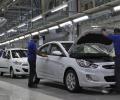
The country's leading automakers Maruti Suzuki and Hyundai Motor reported a decline in dispatches to dealers in March as shortage of electronic components impacted production. On the other hand, Tata Motors, Skoda and Kia India posted their highest ever monthly wholesales last month. Toyota Kirloskar Motor said its dispatches in March were the highest in the last five years while Mahindra & Mahindra also reported a robust increase in its passenger vehicle dispatches in March.

'And a majority will be in the top-end vehicle range.'

Concerned over the fallout of the Red Sea crisis and severe shortage of containers against the backdrop of a steep decline in merchandise exports in August, the Union government is pulling out all the stops to find a solution. To begin with, the government has devised a strategy aimed at boosting container supply and supporting exporters.

The festival season has already begun in the west and south of India with Ganesh Chaturthi and Onam, respectively, and consumer companies are witnessing a pick-up in sales compared to pre-Covid levels. Retailers, fast-moving consumer goods (FMCG) and consumer durables companies expect their sales to grow in double digits this festival season compared to pre-pandemic times, as there are no curbs on movement now. Adani Wilmar expects sales volume to be higher by 15-20 per cent as rural India has largely witnessed good monsoon rains, and employment has picked up in urban areas.

Future Group and V-Mart have put in place systems to prevent panic buying at their neighbourhood grocery stores.
Major automobile manufacturers like Maruti Suzuki, Hyundai, Mahindra & Mahindra, Tata Motors and Toyota Kirloskar on Tuesday reported decline in domestic passenger vehicle sales in May compared to the previous month as a spike in COVID-19 cases and lockdowns across various states hit production and dispatches. The country's largest carmaker Maruti Suzuki India (MSI), which shut production from May 1 to May 16 so as to divert oxygen from industrial use for medical purposes, reported domestic dispatches to dealers at 35,293 units last month, down 75 per cent from 142,454 units in April. The company said sales of its mini cars, comprising Alto and S-Presso, declined by 81 per cent to 4,760 units in May as against 25,041 units in April this year.

The Indian economy is likely to witness close to double-digit growth in the current fiscal year despite the second COVID-19 wave ravaging the country, Principal Economic Adviser (PEA) Sanjeev Sanyal said on Wednesday. The economy is slowly getting back to normalcy as the number of COVID-19 cases is declining, he said while participating in India Global Forum event. "We are probably going to see close to double-digit, if not double-digit (growth) in this financial year," he said.

Passenger vehicle dispatches from factories to dealers declined 13 per cent to the lowest level in five years in December last year as the industry continued to face production issues due to semiconductor shortage, auto industry body SIAM said on Friday. Passenger vehicle dispatches last month stood at 2,19,421 units compared to 2,52,998 units in December 2020. While acknowledging that the chip shortage situation is not expected to dramatically change in the short term, the industry body expressed hope that things will improve soon.

Reliance Jio may not ask for a premium for its 5G services in the initial stages of the launch, according to sources in the company. The company will roll out 5G commercial services in four cities -Delhi, Mumbai, Chennai, and Kolkata - around Diwali this month and slowly ramp up the processes for other cities, too. A senior executive, when asked whether Jio will charge higher tariffs for 5G against 4G, said: "In the initial stages, customers have to adopt 5G, then they will have to find value in the service, and then one can look at monetisation."

Despite the high oil prices, growth in energy demand will continue globally, but there is need to reorient the approach in meeting the challenge, Minister for Petroleum and Natural Gas Murli Deora said on Sunday.
The automobile sector is considered a good indicator of economic health. It has a very long value chain, from primary materials, like metals, glass and plastic, to value-added high-end electronic components, specialised alloys, and software.

The exclusive club that dominates the global semiconductor fab scenario is about to get a new member. Taiwan, South Korea, and China control nearly 70 per cent of the global capacity. SEMI, the global industry body for semiconductor and electronics design and manufacturing, projects all fabs collectively will churn out 30 million wafers a month this year.
Leading carmakers Maruti Suzuki, Hyundai and Tata Motors reported robust dispatches to dealers in May on the back of strong demand for passenger vehicles across regions, even as the global semiconductor shortage continued to impact production. Mahindra & Mahindra, Kia India, Toyota Kirloskar Motor, Honda Cars and Skoda also witnessed strong demand for their models last month. The month of May also witnessed Tata Motors race ahead of Hyundai in terms of domestic wholesales.

'The BJP's numbers in this government are almost the same as those enjoyed by the Congress under P V Narasimha Rao when the reform process was kicked off in 1991.' 'As before, the only constraints on the prime minister's actions are internal, not external.' 'They come from his own assessment of the political consequences of any action,' points out Mihir S Sharma.

In the Rome Declaration, the G20 leaders thanked healthcare and frontline workers, international organisations and scientists for their relentless efforts to cope with the deadly COVID-19 pandemic.

'Investors need to expect steady returns over the next one to two years with bouts of high volatility.'

India's electric two-wheeler (E2W) sector is expected to cross the one million mark in 2024 fuelled by rising demand, increased production, and affordability, industry experts said, even as several original equipment makers are expanding their penetration to rural areas. Improved battery technology and innovative features are also likely to fuel growth, they said. "E2W sales will breach the 1-million mark in 2024 as the demand for electric two-wheelers is expected to continue growing due to factors such as environmental awareness, government incentives, and improvements in technology," Hyder Khan, chief executive officer (CEO), Godawari Electric Motors, said.

Input shortages and low inventories, according to Nomura, will likely lead to production cuts and delayed shipments in the September 2021 quarter.

Airline stocks have been soaring following a steep decline in crude oil prices and sustained passenger traffic. Analysts have particularly turned bullish on the stocks of InterGlobe Aviation and SpiceJet. On December 20, shares of InterGlobe Aviation (IndiGo) hit a record high of Rs 3,009 on the BSE, having surged 43.24 per cent year-to-date (YTD).

'India's manufacturing will take 10-15 years to catch up with China.'

The slot constraint in Indian airports is also going to play a role in pushing airlines to have wide bodies.

The severity of the second wave of COVID-19 infections in India poses a key challenge for the FMCG industry and the spread of the virus to rural areas on a relatively higher scale as compared to the first wave is also expected to weigh on industry growth outlook, according to ITC Ltd. There is heightened uncertainty around the timing and shape of the recovery trajectory of overall economic growth in India due to the virus, the company said in its Annual Report for 2020-21. In terms of consumption, urban-led recovery may be relatively muted compared to the first wave as consumers switch to precautionary savings mode and rising healthcare costs eat into household spending, while rural demand may also be blunted by the large-scale spread of the virus to the hinterland in the second wave.

Modi said New Delhi has emphasised on dialogue and diplomacy along with restraint to deal with the situation arising out of the Hamas-Israel conflict.

Notwithstanding expectations of a pick-up in construction activity during a seasonally strong January-March quarter (fourth quarter) of 2022-23 (FY23), analysts are cautiously optimistic about the building material sector - encompassing paints, pipes, wood panels, tiles, metals, and cement - as volatile input costs, coupled with fears of a global slowdown, are making demand projections uncertain. Against this backdrop, analysts suggest investors stay selective and pick stocks of companies with stronger brand recall, expanding distribution network, diversified product profile, healthier balance sheet, and sustainable cash flow. "The government's various proposals under Budget 2023-24 (FY24) may lead to the building material segment growing between 8 per cent and 12 per cent for the next five years.

According to research firm IDC, a slowdown in smartphone shipments began showing up as early as late February, though companies insist that the March quarter was fine, albeit on a low base.

After the easing of lockdown in mid-May, auto companies were able to resume production in a phased manner, but the ramp-up was slow due to a broken supply chain, and lockdown-induced restrictions.

While FMCG companies were not barred from carrying out their operations during the 21-day lockdown, since most manufacture staples and essential products, capacity utilisation remained poor, owing to the restricted movement of raw materials, finished goods, and labour.

Tata Motor's owned Jaguar Land Rover (JLR) on Tuesday reported a 68 per cent increase in retail sales for the first quarter ended June 30 at 124,537 units as compared with the same period of the previous fiscal, reflecting the continuing recovery in demand from the COVID 19 pandemic. The company had retailed 74,067 units in the April-June quarter of 2020-21. However, wholesales, in particular, were lower than demand would have permitted due to semiconductor supply issues affecting the global auto industry, JLR noted in a statement.

MG Motor India is investing Rs 2,500 crore by the end of next year to increase the production capacity at its Halol plant in Gujarat, as it gears up to launch its mid-size SUV Astor, according to a top company official. Despite the worsening semiconductor shortage situation, which is likely to continue for at least another six months, the company expects its sales this year to grow by up to 100 per cent over last year. "We have done an investment of Rs 3,000 crore already, and by the end of next year, we will do another Rs 2,500 crore. "We will reach a total of Rs 5,500 crore," MG Motor India president and managing director Rajeev Chaba told PTI.

The company has a network of 4,000 distributors, 10,000 stores and 100 mega marts.

'67 per cent of our transactions happen digitally and about 93 per cent of transactions happen outside the branch.' 'Despite that, there is ample scope for promoting banking-related activities in branches.' 'So, for some time, we will have to, probably, live with the same structure.'
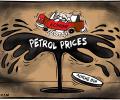
Amid news of a fuel shortage in some parts of the country and wider unrest over fuel issues in the neighbourhood, an analysis of the data from international tracker globalpetrolprices.com shows that the per litre price of petrol is higher in India than in seven out of its nine neighbours.
